

Shaking is a crucial step in mixing cocktails. Whether it’s a classic martini or a modern fruit-flavored cocktail, using a cocktail shaker correctly ensures the best flavor. Many beginners and home bartending enthusiasts ask, “How do I tell if a cocktail has been shaken enough?”
Today, I’ll share some practical tips based on my personal bartending experience to help you make the perfect cocktail every time.

The purpose and principle of shaking wine
First, we need to understand why we shake cocktails. Shaking not only mixes the various liquors and ingredients evenly but also introduces air, making the liquid lighter and smoother. Simultaneously, using ice lowers the temperature, bringing the cocktail to the ideal serving temperature. Shaking balances the liquid’s density and temperature, resulting in more distinct flavor profiles.
When I first tried making a mojito with a cocktail shaker, I found that even with the right ingredient ratios, if it wasn’t shaken enough, the mint and syrup wouldn’t blend properly, and it never tasted sweet enough. After many trials, I’ve summarized a few criteria for judging whether a drink has been shaken enough.
Observe the appearance of the wine shaker.
To use a cocktail shaker is to observe the glass. After thorough shaking, ice will typically create a frosty mist inside the glass, indicating that the drink has cooled down. If the glass remains warm during shaking, or if the liquid still separates noticeably after swirling, then it hasn’t been shaken enough.
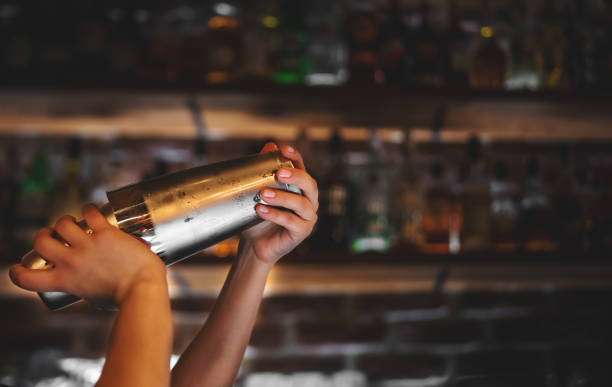
In my personal experience, the difference in appearance is particularly noticeable when using a glass cocktail shaker. Once, at a friend’s party, I used a silver metal cocktail shaker to make a Long Island Iced Tea. For the first few seconds, the ice and liquid weren’t fully mixed, and no frost formed on the glass. After shaking for an extra 10 seconds, a thin layer of frost quickly formed on the glass, and the drink reached the ideal consistency.
Sound Judgment Method
Another useful tip is to listen to the sound of the cocktail shaker. The sound a cocktail shaker makes when it vibrates can also indicate how well the drink is mixed with the ice. Beginners can pay attention to the following points:
When you start shaking the drink, the sound is rather monotonous, and the rhythm of the ice cubes hitting the glass is obvious.
As the drink is shaken more thoroughly and the ice mixes with the liquid, the sound becomes softer and more even, and the rhythm diminishes.
If the sound suddenly becomes sharp or the ice cubes make a “metallic” noise, it means that the shaking was too fast or the ice cubes were too large, which may result in uneven dilution of the wine.
I remember the first time I used a cocktail shaker to make a margarita; judging the shaking time by the sound was very effective. After shaking for about 15 seconds, the sound became even and smooth, and I stopped immediately. The resulting cocktail had a very smooth texture.
Ice melting degree
Ice cubes play a role in cooling and diluting the drink during shaking, so observing the degree of ice melting is a way to judge whether the shaking was sufficient. When the drink is shaken sufficiently, the surface of the ice cubes will be slightly rounded and partially melted, and the temperature of the drink will drop significantly. If the ice cubes are still hard and the liquid temperature is too high, it means the shake was insufficient.
My experience is that when using large, fresh ice cubes, the shaking time should be slightly longer, about 20 seconds, while crushed ice or small ice cubes require a shorter time. I once made a strawberry martini at home using crushed ice, and shaking it for too long diluted the drink, resulting in a less flavorful flavor. This lesson taught me that the size of the ice cubes is closely related to the degree of shaking.
Liquid Mixed State
The most direct way to determine if a cocktail has been shaken sufficiently is to observe whether the liquids are evenly mixed. A well-shaken cocktail should have a uniform color and texture, with no obvious layering or suspended particles. If the cocktail has obvious layering, it means the ingredients in the shaker have not been fully combined.
I personally prefer to briefly stir the juice, syrup, and liquor in a glass before shaking and then swirl it thoroughly in a shaker. This makes it easier to judge whether the shake is sufficient and avoids the problem of liquid separation.

Feel the temperature
The cocktail shaker is also a helpful tip for judging whether the drink has been shaken sufficiently. When you hold the cocktail shaker, if the glass is noticeably cold, the ice has sufficiently lowered the liquid temperature, and the shake has been done enough. If the glass is still warm or only slightly cold, the drink hasn’t been shaken enough.
Once, I tried making a lemon vodka cocktail at home. I gently touched the silver cocktail shaker and found that the glass wasn’t cold enough, so I continued shaking for about 5 seconds. The final cocktail was ice-cold and delicious.
Reference time for shaking wine
Although the size of the ice cubes and the shaking time vary depending on the cocktail and the type of cocktail, the general shaking time for a standard serving of cocktail using a cocktail shaker is as follows:
Once the time is right, you can judge whether the wine has been shaken sufficiently by combining appearance, sound, and feel, rather than relying solely on the stopwatch.
Bartending Tips
In my years of experience mixing drinks at home, I’ve found a few tips to help you determine if the drink has been shaken sufficiently:
Gently tilt and swirl the wine: After swirling, tilt the glass and observe whether the liquid flows smoothly. A full serving of wine will form a uniform flow line.
Try a small amount: Pour out a little; if it tastes refreshingly smooth, it means the wine has been shaken thoroughly.
Choose the right ice: large ice cubes melt slowly, while small ice cubes cool quickly. Different types of ice cubes can affect your judgment when shaking the drink.
Master the rhythm: Shake the liquor at a steady pace, neither too fast nor too slow, otherwise it will affect the mixing effect.
At a family gathering, I used these methods to mix four cocktails for my friends. Each one was refreshingly balanced, and everyone was amazed by the consistency of the taste. This experience further convinced me that proper shaking of a drink relies not only on time but also on observation and feel.
FAQ:
Q1: Is longer shaking better?
A: Not necessarily. Shaking for too long will cause too much ice to melt, diluting the drink and making it taste bland. Judging whether a drink has been shaken sufficiently depends mainly on its appearance, sound, and feel, not just the time spent shaking.
Q2: Does the material of the cocktail shaker affect the judgment of saturation?
A: There will be some differences. Glass glasses make it easier to see the frosting and liquid separation, while metal glasses conduct heat quickly and show obvious frosting. To judge whether it is saturated, you can combine the sound, the melting of the ice, and the temperature felt by hand.
Q3: Is there a difference between shaking with crushed ice and large ice cubes?
A: Yes. Crushed ice cools and melts quickly, so shaking time is shorter; large ice cubes cool and melt slowly, so shaking time is longer. Adjusting the shaking time according to the type of ice makes it easier to judge whether the drink is sufficiently shaken.
Q4: How to determine if the wine is shaken evenly?
A: Observe whether the color and texture of the liquid are consistent, without obvious layering or suspended particles; after shaking, gently tilt the wine glass, and the smooth flow of the liquid is also a reference for judgment.
Q5: Are there quick ways for beginners to judge whether a cocktail has been shaken properly?
A: You can combine several indicators: the degree of frost on the glass, the sound of shaking, the extent to which the ice has melted, the uniformity of the liquid’s color, and the temperature of the glass. With practice, you’ll soon be able to judge by feel whether the cocktail has been shaken sufficiently.
Summarize
Judging whether a cocktail has been shaken properly involves more than just how long it has been shaken; observation and feeling the cocktail shaker are even more important.
Whether you’re a home bartending enthusiast or a professional bar beginner, mastering how to judge whether a cocktail has been shaken sufficiently can significantly improve your bartending skills.
shaker suitable for home use, I recommend choosing a sturdy, easy-grip, and heat-conducting metal or glass shaker to ensure precise control with every shake. Click to shop now and make every cocktail shaker perfect!