

If you’ve ever watched a professional bartender perform, they’ve most likely been using a cocktail shaker. While the three-piece Kobler cocktail shaker comes with a built-in strainer and is convenient to use, the two-piece cocktail shaker is the undisputed king for mixing large quantities of high-quality cocktails, especially suitable for making summer favorites.
The Boston shaker offers numerous advantages—superior cooling capabilities, better sealing, and optimized space make it an essential choice for handling high-juice, high-dilution summer drinks.
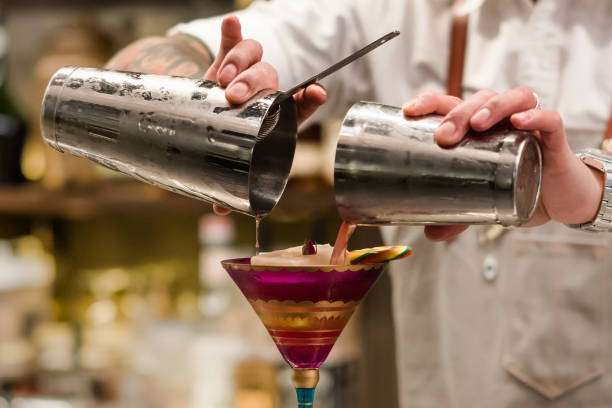
Advantages of a cocktail shaker
The core benefit of chilled citrus cocktails is superior heat transfer (ultra-icy coolness): Stainless steel tin cups conduct heat far better than glass or smaller metal cups, allowing cocktails to cool to near freezing temperature very quickly. This rapid cooling minimizes dilution, ensuring a rich and refreshing drink.
Optimal aeration and emulsification: The cocktail shaker’s large capacity provides maximum “room for maneuver” for the ice cubes, allowing them to move freely and collide violently with the liquid. This vigorous collision is crucial for incorporating air, resulting in richer, more stable foam and perfectly emulsifying toppings such as fruit purees and syrups.
Exceptional durability and hygiene: Its simple two-piece design is easy to clean and less prone to freezing than a shoemaker’s three-piece set.
Professional step-by-step shaking process
Prepare drinks: Pour all ingredients (wine, juice, syrup, etc.) into a small glass or jar.
Filling with ice: Fill a large metal container with ice. Fill it with large, dense ice blocks.
Sealing (“slap”): Invert the small cup onto the large jar at a slightly tilted angle. Use the heel of your palm to firmly slap the metal jar against the point where the cup contacts the metal jar, creating a tight vacuum seal.
Shake (vigorously and quickly): Hold the shaker firmly at both ends, keeping the glass/jar opening facing outwards and away from the guests. Shake vigorously for 15-20 seconds, until a thick layer of frost forms on the surface of the large jar.
Breaking the seal (“tapping”): Place the cocktail shaker metal-side down on a surface. Use the heel of your palm to firmly tap the metal container near the seal line. The rapid change in temperature and release of pressure should break the vacuum.
Filtration: Use a Hawthorne filter to block the ice, and consider using a fine filter (double filtration) to remove small ice chips or particles.
Five Shaking Techniques for Summer Cocktails
For these refreshing, high-juice drinks, we will mainly use two advanced techniques: hard shake (to achieve a pure chilled effect) and dry/wet shake (to achieve foam).
Standard hard rock
Ingredients: Daisy, Watermelon Margarita, Raspberry Lemon Iced Tea, Golden Basil Crushed Ice.
Objective: To achieve clarification and balance by maximizing cooling and dilution.
| cocktail | Cocktail Shaker Focus | Button shaking action |
| 1. Classic Descartes | Shake vigorously to the extreme: This is a speed test. Shake until the jar is ice-cold—this is the standard for proper dilution. | This achieves maximum cooling and creates uniform small bubbles to improve the texture. |
| 2. Raspberry Iced Tea | Large-capacity hard milkshakes: Use the full capacity of a large container to hold more liquid (iced tea, lemonade). | Keep all ingredients thoroughly mixed; do not dilute excessively. |
| 3. Watermelon Margarita | Crush and shake: Before adding ice, gently crush the jalapeños (if using) and/or watermelon chunks in a smaller jar. | Quickly blend fresh fruit fiber with spirits and acidity. |
| 5. Campari Basil Crushed Ice Cocktail | Soaking and shaking method: Gently crush the basil and shake vigorously to allow the basil essential oil to quickly seep into the gin. | Double filtration is required to remove all basil bits and ice crystals to obtain a clean finished product. |
Dry and wet shaking method
Recipe: Passion fruit soda (or any beverage containing egg white/chickpea water).
Objective: To create a perfect, silky foam layer, avoiding over-dilution.
| cocktail | Cocktail Shaker Focus | Button shaking action |
| 4. Passion fruit sparkling drink | Step 1: Dry shake (without ice) | Combine all ingredients (including egg whites); no ice required. Shake vigorously. $15 will emulsify completely and form a foamy structure in just a few seconds. |
| Step 2: Add iced milkshake | Add ice and shake well again. Shake for 15-20 seconds. This will quickly cool the drink and stabilize the foam. | |
| Final step: Complete | Double-filter the beverage into a glass, then pour in the soda water to prevent the foam layer from collapsing. |

Professional techniques for bartenders to achieve perfect results
Preventing and fixing the troublesome “shake lock” (i.e., the two halves frozen together and unable to be opened) is the only real drawback of the Boston shaker, but it’s easily avoided:
Proper sealing: When inserting into a smaller jar, be sure to tilt it slightly before tapping it downwards.
Opening Tips: Never tap the edge of the cocktail shaker against the bar—this will damage the metal. Instead, use the “tapping” technique mentioned earlier to gently tap the side of the shaker to break the vacuum created by its cold state.
Basic rules for achieving optimal flavor
The golden rule for using ice: Use the best ice you can find. Large, solid ice cubes reduce the surface area in contact with the liquid, thus reducing the cooling effect on the drink, minimizing dilution, and resulting in a richer, more balanced flavor.
Safe measurement and preparation: Always add the cheapest ingredients (syrup, juice) first, then add the most expensive alcohol. This way, even if the measurement is wrong, no alcohol will be wasted.
Double filtering is essential: For any shaken cocktail containing fruit puree, fresh herbs, or dry shake (egg whites), always filter it first through a Hawthorne strainer, then through a fine-mesh strainer. This removes small ice cubes and impurities, ensuring a silky smooth texture.
In conclusion:
The cocktail shaker has become the standard for a reason. By understanding its design and using vigorous shaking and dry/wet shaking techniques, you can not only mix ingredients but also control temperature, texture, and aroma.
This summer, ditch the timid stirring and embrace the powerful “slap” of the Boston shaker and the wonderful frost to create cocktails that truly live up to the season.
Which of these classic smoothie drinks would you most like to master first: the frothy passion fruit soda or the refreshing daiquiri? Tell us your signature summer smoothie!