

In cocktail mixing, the cocktail shaker is often considered a “basic tool,” and many people believe that as long as it can hold the liquor and ice, its size will not have a decisive impact on the result. However, the reality is quite the opposite. The size of the cocktail shaker systematically affects the taste of the cocktail, including the cooling speed, dilution level, mixing uniformity, and final flavor profile.
If you’ve ever encountered the problem of the same recipe producing inconsistent results, then besides the proportions and technique, the size of the cocktail shaker is likely a key variable that has been overlooked.
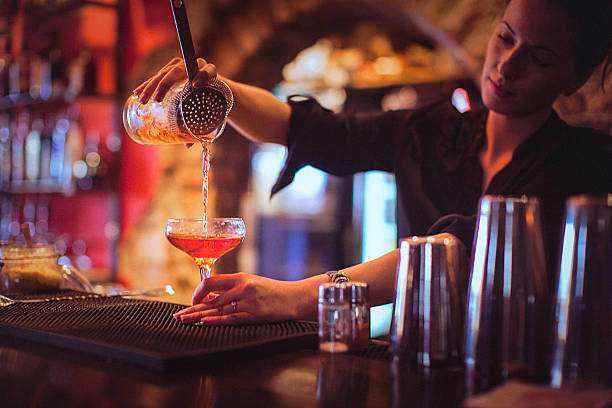
The essence of shaking wine is not just about mixing, but a physical process.
From a technical point of view, shaking a drink is not simply about mixing the liquids but a process in which multiple changes occur simultaneously:
Rapid cooling of the wine
The ice gradually melts, diluting the alcohol.
Different components fully fuse during impact
Introducing an appropriate amount of air alters the mouthfeel.
The size of the cocktail shaker determines the speed and proportion of these changes. Different capacities result in different internal spatial structures, and the movements of ice and liquid are completely different, which will naturally be reflected in the taste.
Cocktail Shaker Size and Cooling Efficiency: Faster Cooling Isn’t Always Better
Many people mistakenly believe that as long as a cocktail is ice-cold, it will definitely taste good. However, in actual bartending, the cooling speed and the balance of taste are not entirely positively correlated.
In a small shaker,
The liquid and ice are in close contact within a limited space, resulting in very rapid cooling. However, the ice melts faster as well, and if not handled carefully, the liquid can be overly diluted.
Medium-sized shaker glasses
provide ample space for ice to swirl, resulting in a relatively gentle cooling process and making it easier to strike a balance between “enough ice” and “not over-diluted.”
Larger-capacity cocktail shakers
typically have more ice, resulting in greater turbulence and more even cooling, but they require higher-quality ice and a more precise shaking rhythm.
In my daily bartending, I’ve compared small and medium-sized cocktail shakers using the same recipe. While the small one was noticeably icy, it felt thin on the palate. Switching to the medium size resulted in a significantly better body and more complete flavor profile. This difference isn’t accidental; it’s a result of the volume structure.
Dilution ratio: How does the size of the swirling glass affect the strength of the wine?
Dilution is an essential part of building cocktail flavor. The right amount of water can bring out the aroma and soften the alcohol, but too much dilution will make the drink taste bland.
The size of the swirling glass directly affects the melting rate of the ice:
a small cocktail shaker, the contact area between the ice and the drink is relatively concentrated, resulting in a faster melting rate per unit time.
a large cocktail shaker, the ice is more dispersed, and the melting process is more controllable.
This is why, with the same shaking time, different-sized shakers can produce completely different tastes. For cocktails that require precise dilution control, medium-sized shakers are often more stable and easier to replicate the results.
Mixing uniformity: Why do some wines taste different before and after mixing?
Evenness of mixing is another key factor affecting the stability of taste. Especially in cocktails containing fruit juice, syrup, egg white, or multiple liqueurs, insufficient mixing will result in a noticeably unbalanced taste experience.
A cocktail shaker with too small a capacity can easily compress the liquor into a localized area when shaken.
Liquids of different densities may not circulate sufficiently.
This results in a significant difference in flavor between the first and last bite.
Previously, when using a smaller cocktail shaker to mix whiskey sour, I experienced a sweet initial taste followed by a pronounced alcohol finish. Switching to a medium-sized shaker significantly reduced this instability. This demonstrates that sufficient internal space is a prerequisite for even mixing.
Bubbles and mouthfeel: The impact of volume on smoothness
The air introduced during the shaking process creates tiny bubbles in the liquid, which directly affect the texture when it enters the mouth.
Small swirling glasses allow for more air intake, but the bubbles tend to be larger.
The air is more evenly dispersed in a large shaker, resulting in finer bubbles.
This difference is particularly noticeable in acidic cocktails. Using a larger cocktail shaker generally results in more stable foam and a smoother mouthfeel, while a smaller shaker can make the texture harsher. This is why professional bars typically avoid using excessively small shakers as their primary tool.
Aroma Release: The Relationship Between the Size of the Swirl Glass and Flavor Layers
Aroma is a very important part of the cocktail experience, and the way aromas are released is also affected by the size of the cocktail shaker.
a small-capacity cocktail shaker, the aroma is concentrated but evaporates quickly.
In medium- to large-capacity shakers, the aromas are distributed more evenly and released for a longer period.
If you’re making a cocktail with gin or herbal liqueur as the core, a small cocktail shaker might cause the aromas to “come on quickly and dissipate quickly,” affecting the overall complexity.
What size shaker is suitable for different types of cocktails?
Short drink cocktails
Such as a martini (requires a rocking version) and some classic variations.
More suitable for small- to medium-sized wine shakers
The key is rapid cooling and precise dilution.
Sweet and sour balanced cocktail
Such as Margarita, Daiquiri, Whiskey Sour
Medium-capacity cocktail shakers are the most stable.
It helps to balance the mixing, foam, and body of the wine.
Fruit juice or multi-ingredient cocktails
More suitable for medium- to large-capacity cocktail shakers
A more adequate mixing space is needed.
Home use vs. party use: Different logic for capacity selection
In a home setting, bartending prioritizes consistency and tolerance for error over speed. Therefore:
Home bartending: A medium-sized cocktail shaker is almost a universal choice.
Highly used at parties: Smaller wine glasses are more efficient for shaking but require more skill.
From a long-term user experience perspective, medium-sized cocktail shakers have an advantage in terms of success rate and consistency of taste, which is why many bartending enthusiasts eventually settle on this size.
Common misconception: The idea that bigger doesn’t necessarily mean more professional is incorrect.
A common misconception is that a larger capacity cocktail shaker is necessarily more professional. In reality, the larger the capacity:
The higher the weight
The higher the quality requirements for ice cubes
It also requires a higher level of control over the rhythm of shaking the wine.
Without the right experience and resources, a large capacity can actually negatively impact the user experience. Therefore, choosing a cocktail shaker size that matches your intended use case is more important than simply pursuing a “large” size.
FAQ:
1. Question: Do different sizes of cocktail shakers affect the alcohol concentration?
A: Yes. The speed at which the ice melts during shaking affects the dilution. In a small-capacity cocktail shaker, the ice melts quickly, making the drink too diluted; a medium-capacity cocktail shaker provides a more even dilution, making it easier to maintain the original alcohol concentration and flavor balance.
2. Q: Will it be easier to shake a smooth cocktail using a large-capacity cocktail shaker?
A: Relatively easy, but requires some technique. Larger-capacity cocktail shakers produce more evenly distributed bubbles, resulting in finer foam and a smoother taste. However, improper shaking rhythm can lead to insufficient mixing or a heavy feel in the hand.
3. Question: What capacity cocktail shaker should I choose for home use?
A: Most home bartenders choose a medium-sized cocktail shaker as the safest option, as it balances ice melting and dilution control, is easy to operate, and is suitable for a variety of cocktails.
4. Question: Are there any advantages to using a small-capacity cocktail shaker?
A: Yes. Small-capacity cocktail shakers are better suited for quickly chilling short cocktails, such as martinis or Negronis, and are also suitable for frequent use at parties. However, it’s important to control the shaking rhythm to avoid over-diluting.
Summarize:
The size of the shaker glass is not a decorative parameter but a core factor directly involved in the construction of a cocktail’s flavor. It affects the cooling rate, dilution ratio, mixing evenness, bubble structure, and aroma release, ultimately determining whether a drink is balanced and enjoyable.
For most cocktail enthusiasts, a medium-sized cocktail shaker is the safest and most cost-effective option, as it can cover most types of cocktails and makes it easier to achieve a consistent taste.
cocktail shaker for you, so that every shake brings you closer to your ideal drink.