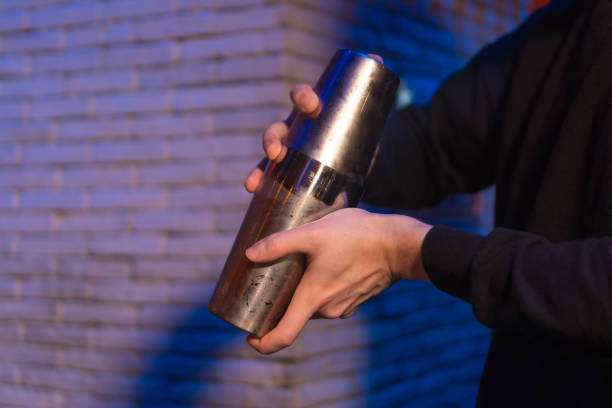
If you’ve ever mixed drinks at home or watched a bartender work up close at a bar, you’ve probably noticed a detail:
When shaking cocktails, some cocktail shakers produce a crisp, clean sound, while others sound like construction work.
Many people subconsciously feel:
Loud = Professional;
Quiet = Incompetent Cup
However, the volume of a cocktail shaker is not simply a matter of “shaking it hard or not.”
It is determined by a combination of factors, including the material, structure, sealing, and the state of the ice.
In this article, we’ll explain where the sound of a cocktail shaker comes from, why there are differences, and how to choose a shaker that’s “pleasant to hear and not too loud.”
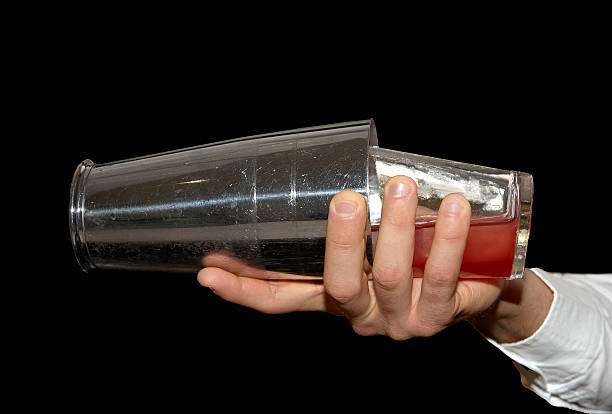
What is the sound of a cocktail shaker, in essence?
In conclusion: the sound you hear is not the sound of alcohol but a combined reaction of ice, metal, and air.
During the shaking process, three main types of sounds are produced:
- The sound of ice cubes hitting the side of a glass
- Resonance sound between the upper and lower cup bodies
- The sound of internal air being compressed and released.
A cocktail shaker is not a sealed, silent container; it makes a sound on its own.
In fact, a good sound is a feedback signal indicating whether the cocktail-making process is going smoothly.
Affecting Cocktail Shaker Volume
Material thickness: Determines whether the sound is “sharp” or “muffled.”
This is one of the most influential factors.
| Characteristic | Thin-walled stainless steel | Thickened stainless steel |
|---|---|---|
| Sound quality | Crisper | Even deeper |
| Vibration/Resonance | Significant resonance | Vibration is absorbed |
| Suitability | Suitable for bar environment | More suitable for family use |
The first one I used at home was a thinner cocktail shaker.
One evening, I made a margarita, and my family immediately thought I was dismantling the kitchen. Later, I switched to a thicker, more solid model, and the sound became much quieter.
Different structural types produce completely different sounds.
Three common cocktail shaker structures:
- Boston Shaker
- The two cups fit together directly.
- The loudest and most noticeable
- The impact of the ice cubes was obvious.
- Three-section Cobbler
- It has a filter and a lid.
- More complex structure
- The sound is relatively diffuse and low.
- French-style cocktail shaker (Parisian)
- Between the two
- The sound is mellow and not harsh.
If you are sensitive to sound, structure is more important than brand.
The tightness of the seal determines whether it’s a “hollow noise” or a “solid noise.”
Many people overlook this point.
- The seal is too loose
- Large vibrations between the cups
- There will be an empty echo.
- The seal is just right
- The ice block impact was clear
- The sound is focused and clear.
- Too tight a seal
- On the contrary, it will amplify the vibration.
- The voice became muffled and heavy.
A good cocktail shaker makes a rhythmic sound when you shake it, rather than a chaotic one.
Ice Cube State: The Hidden Key to Sound Volume
This is a point that is very easy to overlook.
| Ice State | Sound Characteristics | Collision Frequency | Impression |
|---|---|---|---|
| Whole ice/large ice blocks | Deep voice | Low | More “professional” |
| Crushed ice | Sharp sound | Frequent | More noisy |
The same cocktail shaker makes a very noticeable difference in sound depending on whether you use ice cubes or store-bought ice.
Many people assume it’s a problem with the shaker, but it’s actually a problem with the ice.

Liquid level: The closer to “full,” the louder the sound.
When the internal space of the cocktail shaker is too small:
- The ice cubes move to a smaller range.
- More direct impact
- The sound is more focused and louder
Ideally, fill it to about 2/3 capacity for a more balanced and easier-to-control sound.
Shaking the drink will amplify or reduce the sound.
- Straight up and down:
- The sound is harsh and loud.
- Elliptical trajectory rocking method:
- produces a smoother and softer sound.
Professional bartenders don’t work for “looks,” but rather to control the movement of the ice and the sound feedback.
Usage environment: The space also “amplifies the sound.”
- Open kitchen/empty room
- → noticeable sound reflection
- Bar counters and spaces with lots of soft furnishings
- → sound is absorbed
A cocktail shaker that sounds “loud” at home might be just right in a bar.
Loud sound ≠ good quality; this is very important.
Many beginners are misled by the “loudness,” but from a long-term usage perspective:
| Too Loud | A Moderately Loud Cocktail Shaker | |
|---|---|---|
| Experience | More tiring to play | Better sense of control |
| Feedback | The vibration is more obvious | It is easier to judge the state of ice |
| Home Use | Not suitable for nighttime use at home | More stable experience |
A truly good cocktail shaker is one that you can “understand what it’s telling you.”
A cocktail shaker with a more pleasant sound?
Here are a few practical suggestions:
- Choose medium to thick stainless steel
- , three-section or French style is preferred.
- Pay attention to the fit of the cup body; it shouldn’t be too loose.
- Use with large blocks of ice
- Don’t choose a capacity that is too small.
If you don’t want every shake of your drink to sound like you’re banging a gong, these details are more important than “brand reputation.”
FAQ
Q1: Does a louder cocktail shaker make the ice melt faster? Not necessarily. The melting speed depends more on the size of the ice and the shaking method than simply the volume of the sound.
Q2: Why does the same cocktail shaker sometimes make noise and sometimes not? This is usually due to changes in the size of the ice cubes, the amount of liquid in the shaker, or the seal.
Q3: Why is the three-section cocktail shaker quieter? Because the structure disperses the vibrations, and the sound is absorbed by the multiple layers of the structure.
Q4: Can I make shaking the drink quieter by using different techniques? Yes, using a smoother elliptical shaking motion will make the sound noticeably softer.
Q5: Do you really need a very loud cocktail shaker for home use? No, stability and comfort are more important for home use.

Summarize:
If you’ve already found that:
- shaking alcohol is too noisy.
- the vibration is too strong, and
- It’s not suitable for home use…
That’s probably not a technical issue on your part, but rather that you didn’t choose the right cocktail shaker.
We have carefully selected several stainless steel cocktail shakers that are more suitable for home use.
They have more user-friendly sound control and are well-sealed, taking into account feel, quiet experience, and professional performance.
Choose a cocktail shaker that’s truly “easy to use and pleasant to listen to,” and turn bartending into an enjoyable experience, not a source of noise.